I woke up a few Saturdays back to learn that a mosque in Victoria, Texas was set ablaze due to an incident of arson. Prior to sleeping on that very next Sunday night, I was wrapping up my lesson plans for the week. As I was just about to crash for the night, I read a headline involving a shootout at a Québec based Islamic center. This is the reality of a Muslim in America during 2017. Both of these incidences occurred in two North American nations, in the aftermath of my President signing an executive order, which attempted to ban members of my faith background from attaining the American opportunity that shines through the torch of the Statue of Liberty. As a first year teacher in Connecticut, my colleagues would often ask as to how I cope and deal with being a young Muslim-American during this chapter of the American experience. I would respond by saying that I feel as though I am a Japanese American in the United States during World War II or a Jewish man attempting to cope with the rise of Nazism within Germany. Upon Trump’s election, I remember saying the following: Osama Bin Laden took my religion and Donald Trump took my nation.

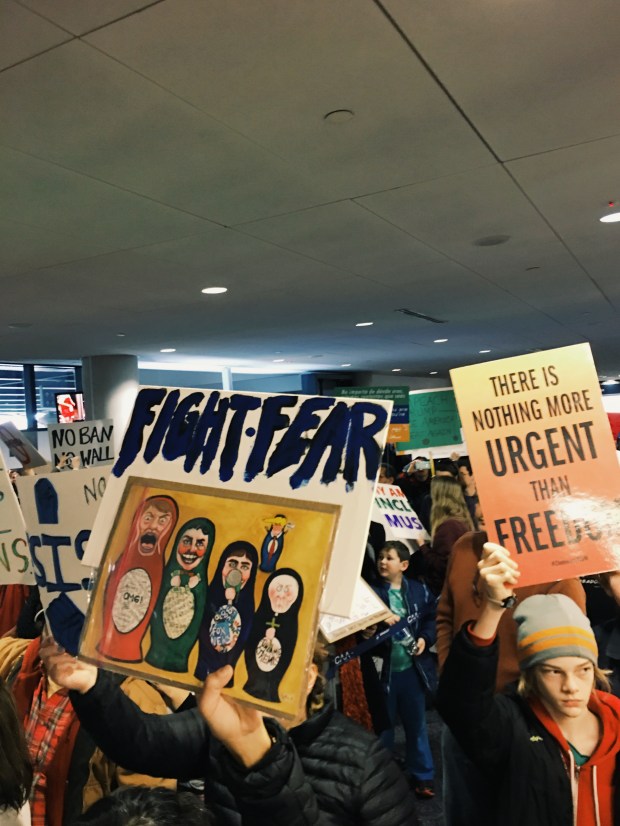
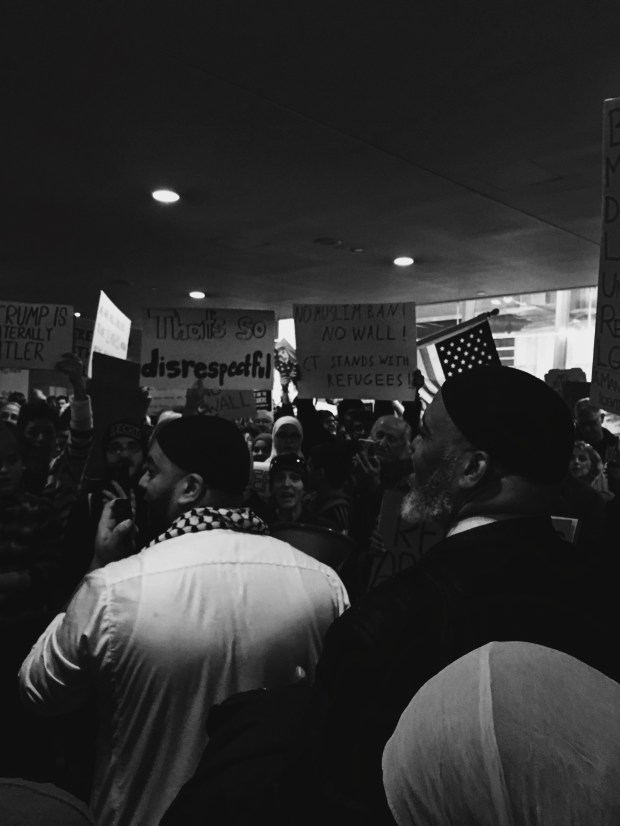
As the son of immigrants and being a Pakistani-American who was born, raised, and educated in Connecticut, it gave me tremendous joy, comfort, and relief that my fellow Connecticut residents protested our President’s executive order at Bradley International Airport. Seeing airports transform into safe havens despite attempts to establish them as detention centers was a heartfelt experience. Seeing my brothers and sisters rise up in the face of bigotry was enigmatic. The Trump phenomena may have inspired those who lit the mosque in Texas; however, it has also contributed to kindling a soft place for Muslim Americans in the hearts of over 50 million Americans, nationwide. I will never forget the outpour of love that my fellow American people had through contributing over $1 Million USD to the Texan mosque and the harmony that the Jewish members of Victoria displayed through giving the keys of the local synagogue to the Muslim community in order to continue services and congregation. We shall overcome.

 Chirping Cricketer